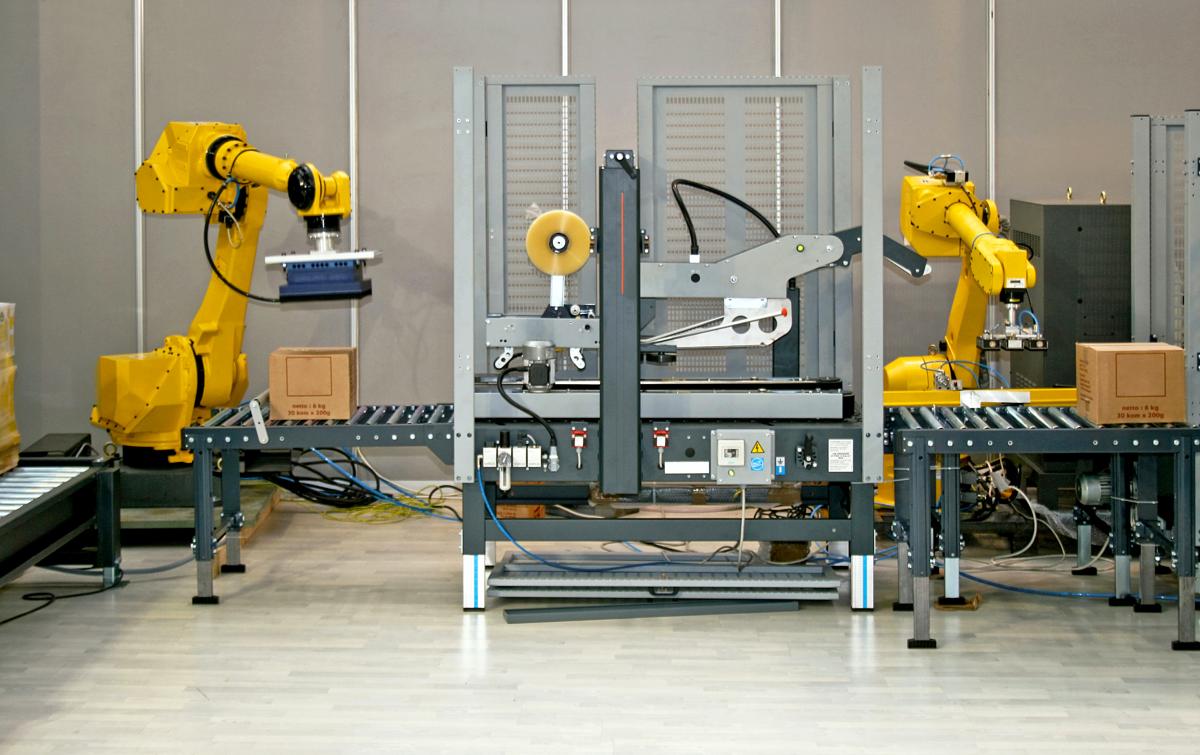
In today’s high-speed manufacturing environment, it is critical to have reliable, efficient packaging. Packaging plays an essential role in brand building and consumer satisfaction. But, achieving consistency in quality and speed can be challenging. This is particularly true as product diversity and market demands continue to increase. The solution is automated packaging equipment.
Quality Control and Consistency:
Packaging should be uniform and high-quality, especially for industries such as food, pharmaceuticals or consumer goods. The manual packaging process is inherently susceptible to variations caused by human error. Automated machinery, on the other hand, provides a higher level of consistency.
These machines have been programmed to repeat packaging tasks with precision. Automated packaging equipment, whether for filling or sealing containers or even applying labels, maintains a uniform level of quality, reducing the likelihood of packaging errors, product recalls, customer dissatisfaction, etc.
Increased productivity:
For packaging to be effective and scalable, it must meet the needs of an ever-growing market. Manual labour can be essential but often has limitations in production capacity. This is due to physical restrictions and the requirement for rest periods. On the contrary, automated devices work continuously at a consistent rate, thereby increasing productivity.
Automated lines for packaging products can handle large volumes within a shorter time. This allows the manufacturer to fulfil orders on time and meet strict deadlines. This not only improves efficiency but also opens up doors to new revenue opportunities and business models.
Reduction in Labor Costs:
The labour costs of a producer can represent a large portion of their expenses. Automating packaging procedures can lead to significant savings in the end. Automated equipment allows businesses to reduce their manual labour requirements, especially when performing repetitive and laborious tasks.
Investing in automated equipment and setting it up can be expensive, but labour costs will decrease over time, productivity will increase, and the ROI (return on investment) will increase. Businesses can reallocate personnel to better-paid and more valuable roles.
flexibility & Customization:
Packaging requirements are often different, even in the same industry. Different products will require different materials, sizes and formats. Manual processes can be costly and inefficient when adjusting for these variations. Automated packaging equipment allows for flexibility and customization.
Modern automated systems can quickly switch between different packaging formats. This flexibility allows manufacturers to adapt to changing market requirements and provide customized solutions for packaging without having to retool or take significant time off.
Packaging and Material Optimization:
Using packaging materials effectively is not only economical but also environmentally responsible. Automated equipment is a great way to minimize waste. These machines accurately measure and dispense materials to reduce waste.
Some automated systems have smart sensors or vision systems that detect and alert to defects in packaging. They can reduce waste and also improve cost-efficiency.
Safety and Compliance for Enhanced Safety:
The safety of employees is the top priority for manufacturing. Manual packaging poses risks to workers, especially in industries that use hazardous materials and heavy machinery.
Automated packing equipment can reduce the need to intervene manually, improving production floor safety. These machines are also programmed to follow specific packaging standards, such as labelling regulations and safety standards, which minimizes non-compliance risk.